
How to Build a Lead Generation Funnel That Converts
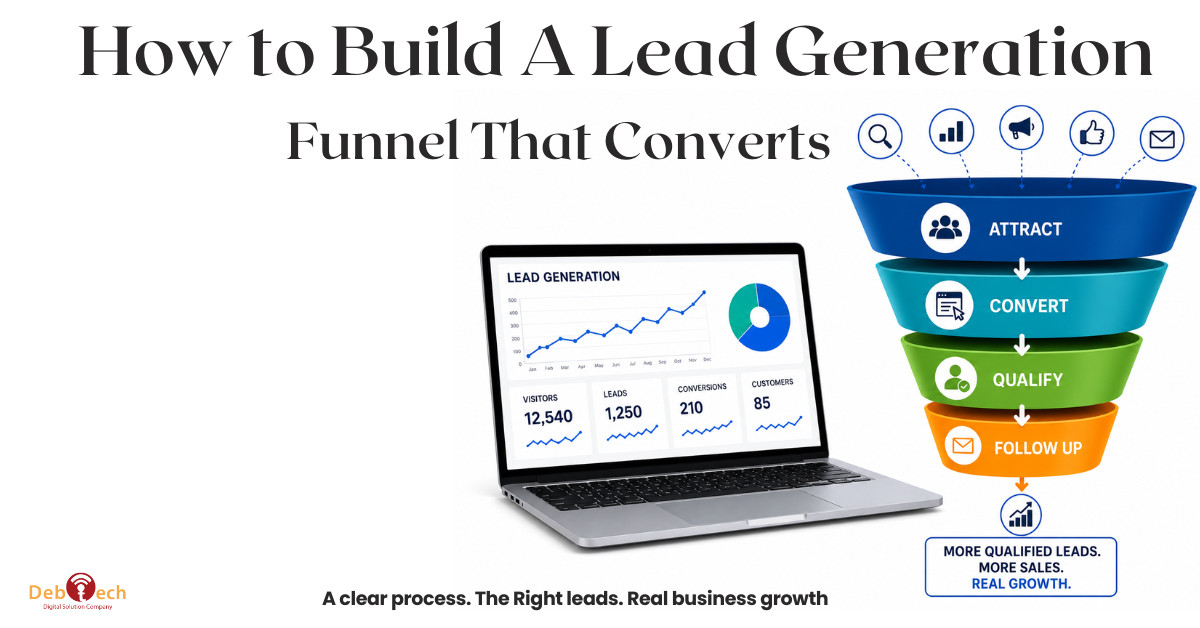
A website can attract thousands of visitors and still produce very few sales conversations. The usual problem is not traffic alone. It is the missing system between first click and sales follow-up. Knowing how to build a lead generation funnel gives your business a defined path for turning attention into qualified opportunities, rather than hoping a contact form does the work.
For a local service company, B2B firm, SaaS startup, or growth-stage business, the funnel should connect marketing activity to a measurable business outcome. Every campaign, page, form, email, and sales handoff needs a job. When those pieces operate separately, leads slip through gaps. When they work as one system, you can see where prospects hesitate, what channels drive revenue, and what to improve next.
Start With the Revenue Goal, Not the Landing Page
Many businesses begin by designing a landing page or launching ads. That reverses the process. Start with the commercial target: the type of customer you want, the service or product you want to sell, and the action that signals genuine buying intent.
A high-value B2B service may define a qualified lead as a decision-maker who books a consultation and meets criteria for company size, location, need, and timeline. A local provider may prioritize phone calls from prospects within a specific service area. An eCommerce business may focus on first purchases, repeat purchases, or abandoned-cart recovery. The funnel structure depends on the sales cycle, so there is no universal conversion event.
Work backward from the outcome. Ask what a prospect must understand before contacting you, what concern is likely to stop them, and what information your sales team needs to respond effectively. This creates a funnel based on buyer behavior instead of internal assumptions.
Define One Audience and One Core Problem
A funnel becomes weaker when it tries to persuade everyone at once. A business owner looking for local SEO help has different concerns from an operations leader seeking a custom software solution. They may both need digital support, but their search terms, objections, timelines, and desired proof are different.
Choose one primary audience for each funnel. Then identify the problem they recognize in their own words. Examples include low-quality leads from paid campaigns, a website that performs poorly on mobile, weak visibility in local search, or a manual workflow that is slowing down operations.
Your message should make the cost of that problem clear without overpromising. Specificity creates relevance. “Get more leads” is broad. “Turn more paid traffic into booked consultations with a mobile-first landing page and faster response workflow” gives the prospect a concrete reason to continue.
Match the offer to buying readiness
Not every visitor is ready for a sales call. A prospect comparing agencies may respond to a website or ad account audit. Someone researching a complex service may prefer a planning guide, checklist, or case-based assessment. A buyer with an immediate need may want a consultation or quote request.
The right offer is valuable enough to earn a response and focused enough to attract the right response. Avoid generic giveaways that generate email addresses without purchase intent. More leads are not better if your team spends hours chasing people who will never become customers.
Build the Funnel in Four Connected Stages
The most effective lead generation funnels are simple enough to manage and detailed enough to diagnose. Think in four stages: attract, convert, qualify, and follow up.
1. Attract the right traffic
Traffic sources should match intent. Search engine optimization is valuable for prospects actively looking for a solution. Paid search can capture urgent demand quickly when campaigns target services, locations, and problems with commercial value. Social media campaigns can create awareness or retarget people who have already interacted with your brand.
Do not send every source to the same general website page. A person searching for a specific solution should arrive on a page that answers that search directly. The ad, keyword, social post, or email must align with the page headline and offer. If the message changes after the click, conversion rates usually suffer.
For businesses competing in Northern Virginia and the broader DC metro market, local relevance can matter significantly. Service areas, proof of local experience, response expectations, and market-specific language can help a funnel feel more credible to a nearby buyer. Use it where it strengthens the decision, not as filler.
2. Convert attention on a focused landing page
A landing page has one primary objective. It should not force a visitor to hunt through multiple service menus, vague claims, or unrelated calls to action. Lead with the business result, explain the process at a practical level, support the claim with proof, and make the next step obvious.
Conversion-focused pages typically answer five questions quickly: What is this? Who is it for? What problem does it solve? Why should I trust this company? What should I do next?
Keep forms proportional to the offer. A request for a detailed proposal may justify asking about company size, project scope, and timeline. A quick audit request should require less. Every extra field creates friction, but collecting too little information can make it hard to qualify and route the lead. Test the balance based on lead quality, not form completion rate alone.
Mobile performance is also part of conversion strategy. A page that loads slowly, hides critical content, or makes form completion difficult on a phone can waste paid media spend and search visibility. Review the full experience on actual mobile devices, including tap targets, page speed, call buttons, and confirmation steps.
3. Qualify before the sales handoff breaks down
A form submission is not a sales-ready lead by default. Build qualification into the funnel using a combination of form fields, routing rules, and follow-up questions. The goal is not to create barriers. It is to give the right prospect a relevant next step while keeping the sales team focused.
A simple qualification model can account for fit, urgency, and engagement. Fit covers factors such as service area, business type, or project need. Urgency considers timing and stated pain. Engagement looks at actions such as returning to a key page, opening a follow-up email, or booking a meeting.
Sales and marketing need a shared definition of a qualified lead. If marketing reports success based on form fills while sales rejects most of those contacts, the funnel is not performing. Review lead quality together, including closed opportunities and reasons leads were disqualified.
4. Follow up while intent is still active
Speed matters because prospects often contact several providers. An automated confirmation message should arrive immediately and tell the person what happens next. A qualified request should trigger prompt human outreach, ideally with context from the form, campaign, and pages viewed.
Follow-up should not depend on one email. Some prospects need proof, answers to objections, or a reminder to take the next step. A short sequence can reinforce the offer with useful information, relevant examples, and a clear call to schedule or respond. Keep it tied to the original problem. Generic promotional emails dilute trust.
For high-consideration services, retargeting can also support the follow-up process by bringing qualified visitors back to a relevant page. It works best when the message addresses a real next question, not when it repeats the same ad without context.
Measure the Funnel From Click to Revenue
A funnel cannot be optimized from top-line traffic data alone. Track each stage: source, landing page visit, conversion, qualified lead, booked meeting, opportunity, and closed sale. This shows whether a problem is attracting the wrong audience, losing visitors on the page, producing weak leads, or failing during sales response.
Use consistent campaign naming and connect forms, calls, and scheduling actions to your reporting process. If phone leads matter, call tracking and source attribution deserve the same attention as online forms. If multiple team members handle inquiries, establish clear ownership so no lead is left without a response.
The most useful metrics are often ratios, not raw totals. Watch visitor-to-lead rate, lead-to-qualified-lead rate, qualified-lead-to-opportunity rate, and opportunity-to-sale rate. A campaign with fewer leads may be far more profitable if the leads fit your business and move through the pipeline.
Improve One Constraint at a Time
Funnel optimization is not a redesign marathon. Find the biggest constraint, make a focused change, and measure the result over enough data to avoid reacting to noise. If qualified traffic is low, improve targeting and search intent. If traffic is strong but conversions are weak, revise the message, offer, page structure, or form. If leads are plentiful but sales are low, examine qualification and response time.
Test meaningful changes rather than minor cosmetic edits. A sharper offer, a better-aligned landing page, stronger proof, or a faster response workflow can change outcomes more than button color ever will. Document what changed, why it changed, and what happened afterward. That discipline turns marketing decisions into repeatable operating knowledge.
A lead generation funnel should make growth easier to manage, not add another disconnected tool to your business. Build it around your real sales process, give every stage an accountable owner, and keep improving the point where qualified prospects are most likely to walk away. That is how digital activity becomes a dependable source of revenue.